
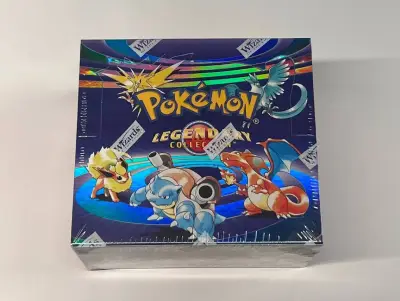
Legendary Collection Booster Box
POKÉMON $5000
$190,000
Pay USDG, stay on Robinhood Chain. A real vault opens a real slab, we custody it, buy it back at a posted floor, or ship it to your door. Odds and edge shown first.
Cheapest machine right now: pokemon_25 at $25, average card $27.44, vault edge −6.71% before our 3% fee.
CA drops at launch.
$MINT has not launched. No presale, no allocation round, no whitelist — anyone offering you one is running a scam. The fair launch happens on pons.family, and the address appears here and on the pinned post of @pokemintRH at the same moment. This site will never ask you to sign a transaction, approve a token, or enter a seed phrase.
A paper rip runs the machine's real posted odds and hands you a real card from its live winner feed — never our own randomness, so the demo cannot be tuned to look generous. It prints the same receipt a paid rip does, including what you would have paid.
—
—
Weekly
Crank the machine and a real card from its live feed lands here, with what you would have paid printed next to what it is worth.
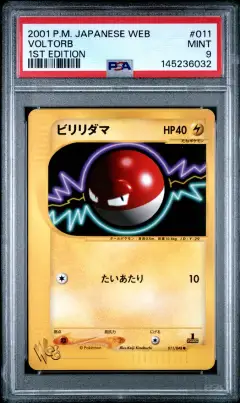
2001 #011 Voltorb 1st Edition PS
PSA MINT 9
$32
Feed sampled 58 pulls across 4 machines. Cards shown are ones the vault actually paid out, never a render.
Not concept art, not a mockup — graded slabs sitting in the vault behind the machines, with their own images and their own insured values.
 GRADE 10
2011 #SL7 Lugia-Holo PSA 10 Call
$250,000
epic · POKÉMON $5000 machine
1.0% of rips
land in this tier.
One hundred rips of the POKÉMON $5000 machine, coloured by its own posted odds. The coral squares are the tier this card sits in — and each of those hundred still costs the edge.
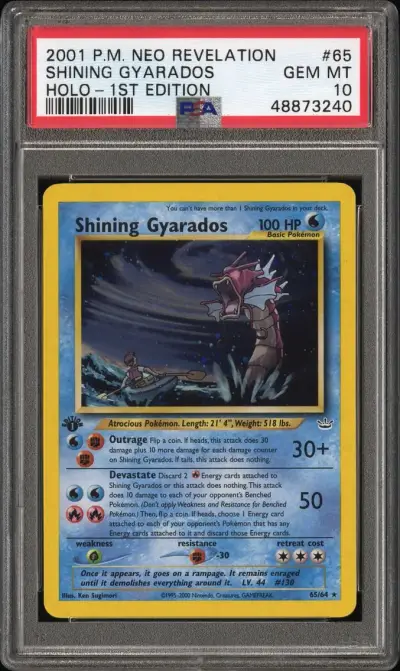
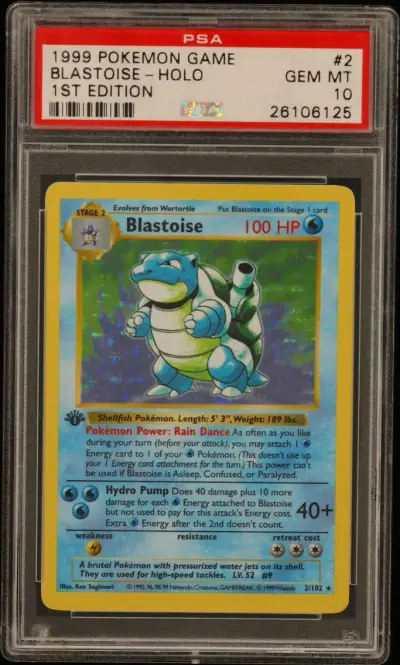
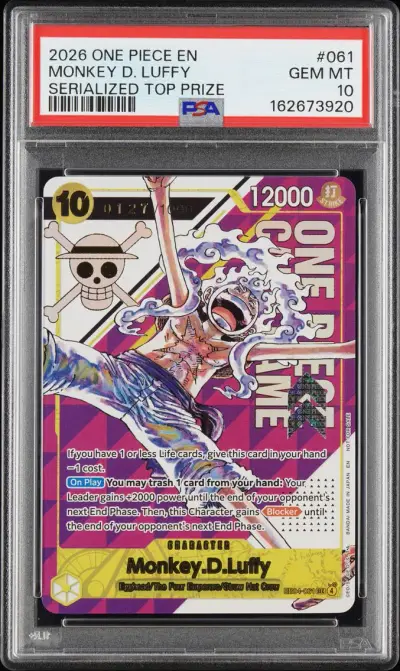
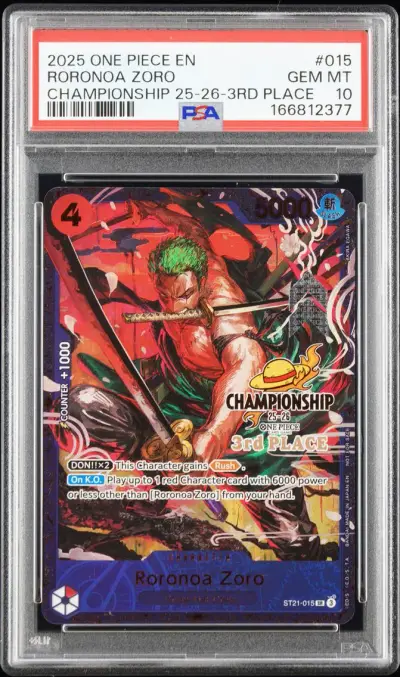
Catalogue read 7 Sept 2026 · 13:37 UTC · images self-hosted, so this page never calls a third-party CDN · insured values are the vault's, not our appraisal.
EV, odds and stock move all day and vanish. We poll and bank the lot so a trend exists at all. Sort it, filter it — the edge column already includes our fee and spread, because folding them in would be the oldest trick in the category.
| pokemon_2500 | $2,500 | $2,553.93 | 102.2% | 93% | $2,375.16 | −9.1% |
|---|---|---|---|---|---|---|
| pokemon_1000 | $1,000 | $1,020.06 | 102.0% | 93% | $948.66 | −9.3% |
| pokemon_5000 | $5,000 | $5,098.01 | 102.0% | 93% | $4,741.15 | −9.3% |
| onepiece_1000 | $1,000 | $1,019.02 | 101.9% | 93% | $947.69 | −9.4% |
| football_100 | $100 | $105.19 | 105.2% | 90% | $94.67 | −9.5% |
| sports_100 | $100 | $105.16 | 105.2% | 90% | $94.64 | −9.5% |
| baseball_100 | $100 | $105.05 | 105.0% | 90% | $94.54 | −9.6% |
| baseball_250 | $250 | $262.46 | 105.0% | 90% | $236.22 | −9.6% |
| basketball_250 | $250 | $262.27 | 104.9% | 90% | $236.04 | −9.7% |
| onepiece_250 | $250 | $262.25 | 104.9% | 90% | $236.02 | −9.7% |
| basketball_100 | $100 | $104.88 | 104.9% | 90% | $94.40 | −9.7% |
| pokemon_250 | $250 | $262.19 | 104.9% | 90% | $235.97 | −9.7% |
| football_250 | $250 | $261.56 | 104.6% | 90% | $235.40 | −10.0% |
| anime_75 | $75 | $82.84 | 110.4% | 85% | $70.41 | −10.2% |
| sealed_80 | $80 | $83.28 | 104.1% | 90% | $74.95 | −10.4% |
| onepiece_50 | $50 | $55.01 | 110.0% | 85% | $46.76 | −10.6% |
| pokemon_25 | $25 | $27.44 | 109.7% | 85% | $23.32 | −10.8% |
| pokemon_50 | $50 | $54.40 | 108.8% | 85% | $46.24 | −11.6% |
Thinnest all-in edge in this view: pokemon_2500 at −9.1%. Still a cost, not a strategy. All-in = vault edge + our 3% fee + 1.5% spread.
Deliberately missing: a trend column. Banking only began recently, so there is no history to draw yet — and an empty column beats a fabricated sparkline. That gap closes on its own; every day the indexer runs, the archive grows and the distance a competitor would have to make up widens.
Almost everyone gets this backwards, including people who rip daily. Pick a machine, pick a rip count, and watch the arithmetic run on real numbers read from the vault.
$51.50 × 10
85% floor − 1.5%
11.6% all-in edge
1 − (1 − p)^n. A hundred rips at 1% is 63.4%, not 100% — and each rip still costs the edge whether or not it lands.
Expected value over many rips, not a forecast of yours. Any single rip is pure chance. The predictable part is the 11.6% all-in edge — the vault's 7.52%, our 3% fee, and the 1.5% buyback spread — and it applies whether you win or lose. Ripping is entertainment and collecting, never income.
A rip used to mean one cross-chain round trip per click. Credits move that loop off the chain: one credit is one dollar, rips clear in about a second, and the only onchain moments are the two you would want anyway.
Three a day, no wallet. Same machines, same live odds. The card you get is a real one from the live feed — the demo cannot be tuned to look generous.
Connect the Robinhood Chain wallet you already have and deposit USDG. One credit is one dollar. That is the last time you wait on a chain.
Credits leave the ledger, our float pays the vault, the pack opens on Solana. You sit on one screen for ten to forty seconds and never bridge.
Card, grade, insured value, what you paid, the vault tx and the VRF proof on one receipt. Keep it, take the posted buyback into credits, or ship the physical slab.
Deposit once on Robinhood Chain. The payment listener credits the ledger the moment the transfer confirms.
Credits leave the ledger instantly; the Solana float settles with the vault behind the scenes, in batches.
The posted floor is paid back into your balance the moment you take it. Rip again or leave.
Credits back to USDG on Robinhood Chain. Minimum $20, instant up to $500, reviewed above. Limits published.
Credits cannot be transferred or traded and pay no yield. They exist to rip and to leave.
Deposit and withdraw. Everything between is a ledger we can audit, cap, reconcile hourly and alarm.
0%
$20
$500
Charging you to leave is how a product tells you it expects you to.
The uncomfortable fact about any custodial gacha: the randomness happens somewhere you cannot see. Ours fires on Solana, under our account. Left alone that means taking our word for it — so we don't leave it alone.
Every rip permanently stores four things, and the receipt hands you all of them: the credits that left your balance, the vault pack-open transaction, the VRF request and proof, and the resulting card with its insured value.
The receipt links out to the explorer and to a public verify page — /verify/:ripId — where roll, tier and card each trace back to the same proof the machine used. No wallet needed to look, so you can hand the link to a stranger.
Paper rips print the same receipt, watermarked, with no transaction attached. Same layout, same honesty about what it cost — the only difference is that no money moved.
Provably fair should not be a paragraph in a whitepaper. It should be a button. Ours is — and it works even though the randomness lives on a chain you never touch.

what left your balance, fee included
the vault transaction we paid for
the randomness the machine actually used
every step derived from that proof
what it cost against what came out
The record attached to every rip. Values are placeholders — real ones appear on your own receipt, and on the public verify page for anybody else's. Vault, VRF and shipping belong to Collector Crypt; the proof layer is ours.
USDG in, a float out, graded cards in custody. Custodial gacha gets attacked, and pretending otherwise is how projects become postmortems. So the controls are published, not implied.
Majority of value in cold storage. Those seed phrases never touch a server.
Signing keys sit in one service, separate from the API. Owning the API does not mean being able to sign.
The signer can pay the vault and approved buyback targets. Not “shouldn’t” — cannot.
A bounded blast radius. Even a fully successful attack hits a ceiling it cannot raise.
Funds moving fires instantly. What decides how bad an incident gets is the gap between it happening and us knowing.
Ledger total against hot, float and cold. Drift beyond a threshold freezes withdrawals before it freezes anything else.
Nothing internet-facing touches the container runtime. Secrets stay server-side, never in a browser bundle.
Treasury and float addresses are public, so outflows are auditable by anyone who cares to check.

Security is enforcement, not obscurity.
The engine is internet-facing because the browser has to reach it. It is safe because it authorises every request — not because anyone assumes the URL went unnoticed. This landing page holds zero credentials and zero wallet code; it is a pile of static files.
Polls the vault every 60s, writes only on change, logs every cycle so silence and downtime look different.
The only balance that exists. Atomic rows, idempotent deposits, hourly reconciliation.
Holds the keys, nothing else. Allowlist, per-tx and daily limits, alarm on every outflow.
Draws a real card from the live feed by the machine's posted odds. Rate-limited by device.
Renders the share image and the verify page for every rip, paper or real.
Four narrow endpoints, a read-only database role, CORS locked to our domains.
The odds belong to the machine's VRF and are identical for a whale and a newcomer. Anything else would be a lie and a legal problem. So the token does the things a token can honestly do: discount, access, seats, and a share of fees that actually came in.
fee discounts + free rips, funded only by fees actually collected
engineering, legal reserve, float top-ups from cold
market-buys $MINT on every fee event and destroys it
The pool is a share of fees actually collected, sized by volume. A quiet week pays a small pool and drains nothing; a loud week pays a big one. No fixed rate is promised, so none can be broken.
3% on top of the vault price, charged in credits at rip time. Needs the vault resale deal.
Vault floor minus 1.5%. An 85% floor pays 83.5% into your credits.
Hold-gated whale feed, alerts, CSV and API. Runs today, no deal needed.
Handling on physical redemption when the slab ships.
Paid in $MINT and burned. Not income — it drives the rip volume of 01.
Launchpad curve fee on $MINT trades. Creator tax is 0%.
Seat at a scheduled high-tier batch. Bought in $MINT, 100% burned. The ticket buys the seat, never the pull.
20% of every fee event market-buys and destroys $MINT.
Reward weight = amount × consecutive days. Sell any and the streak resets. Seven-day cliff before eligibility.
Rips are paid in credits, one to one with USDG — playing is never gated behind a volatile asset. The most $MINT can do to a price is take 25% off the 3% fee. That is the whole discount, stated plainly so nobody has to reverse-engineer it.
Real rips need a resale permission from the vault, an isolated signer and a funded float. Until all three exist the buttons stay dead — and the free floor, the terminal and the token do not wait for them.
Four failures show up in every onchain card product. They are the reason this one is shaped the way it is — and the risks below are printed at the same size as the strengths.
Robinhood Chain holds USDG and an appetite for tokenized real-world value. The best card gacha in crypto is unreachable to it without bridging, SOL and a new wallet.
The machines publish today and forget yesterday. EV, odds and stock vanish the moment they move. Nobody banks the series.
When the VRF fires under a custodial account, the buyer has no way to verify the pull. It is a promise.
Every product in the category starts with a wallet prompt. Nobody gets to feel the odds before paying.
Card gacha lives on Solana; Robinhood Chain users cannot play without a second wallet
Pay USDG on Robinhood Chain. The Solana plumbing is ours, in the kitchen
Bare front-ends: no PnL, no live EV, no history
A terminal: live EV, odds, stock, PnL and banked history from day one
“Trust us” pulls on a chain the buyer cannot see
Every rip exposes the vault tx and VRF proof on a receipt anyone can open
Wallet first, then maybe a demo
Paper rip first, free, real odds. Wallet only when you want the real thing
House edge hidden, sold as a way to get rich
Edge printed next to every price, sold as entertainment and collecting
Vault source obscured
Vault named, not-affiliated stated. Transparency is the trust feature
Most of this category hides these paragraphs in a footer. For a custodial product, saying them plainly is the trust feature.
A free rip with the real machine's real odds. You get an actual card from that machine's live winner feed and see what you would have paid against what it is worth. Three a day, no wallet, no signup. It is a demo of the odds, not a lottery.
No. Not to paper rip, deposit, rip, buy back or redeem. Solana shows up in exactly one place, the proof links on your receipt.
Prepaid tickets, one to one with USDG. Deposit once, rip many times in about a second each, withdraw back to USDG with zero fee. They cannot be transferred or traded and pay nothing.
Because we publish the trail. Every rip stores the vault pack-open transaction and the VRF request and proof. The receipt links to the explorer and a public verify page anyone can open.
Custody always needs some trust. What we can do is bound it: cold storage with seeds off-server, an isolated signer that can only pay an allowlist, per-transaction and daily limits, an alarm on every outflow, an hourly reconciler, and published wallets.
It funds the split: half to the holder pool, thirty to treasury and float, twenty to buyback and burn. It is printed next to every price, never folded into it.
No, and we will never market it as one. Expected payout after buyback sits below pack price by design. Rip because opening real graded cards is fun and you want the cards.
Yes. Redemption ships the actual graded slab to your address, one of the three things you can do with a pull alongside keeping it or taking the buyback.
Fee discounts, free rips funded from fees actually collected, more paper rips, the premium terminal, seats at Mint Night, and a governance signal on the split. Never better odds.
After the vault resale permission, the signer and the float are in place. Paper rip, the terminal and the token do not wait for that.